Munch and Redon: Two Ways of Seeing Inward

CloudCat.

Munch and Redon: Two Ways of Seeing Inward
Odilon Redon
Young Man (Jeune Homme), 1896-1900
Brush and black ink on laid paper
31.12 × 24.13 cm
Odilon Redon
Saint Sebastian, 1910/1912
Oil on canvas
144 × 62.5 cm
165.7 × 84.8 cm (framed)
Odilon Redon
Pandora, 1910/1912
Oil on canvas
143.5 × 62.9 cm
161 × 81 cm (framed)
Odilon Redon
The Sphinx: "My gaze, which nothing can deflect, passes through the things and remains fixed on an inaccessible horizon." The Chimera: "I am weightless and joyful", 1889
Lithograph
Odilon Redon
Le Buddha, 1895
Lithograph
31.7 × 24.8 cm
60 × 42.8 cm (sheet)
Odilon Redon
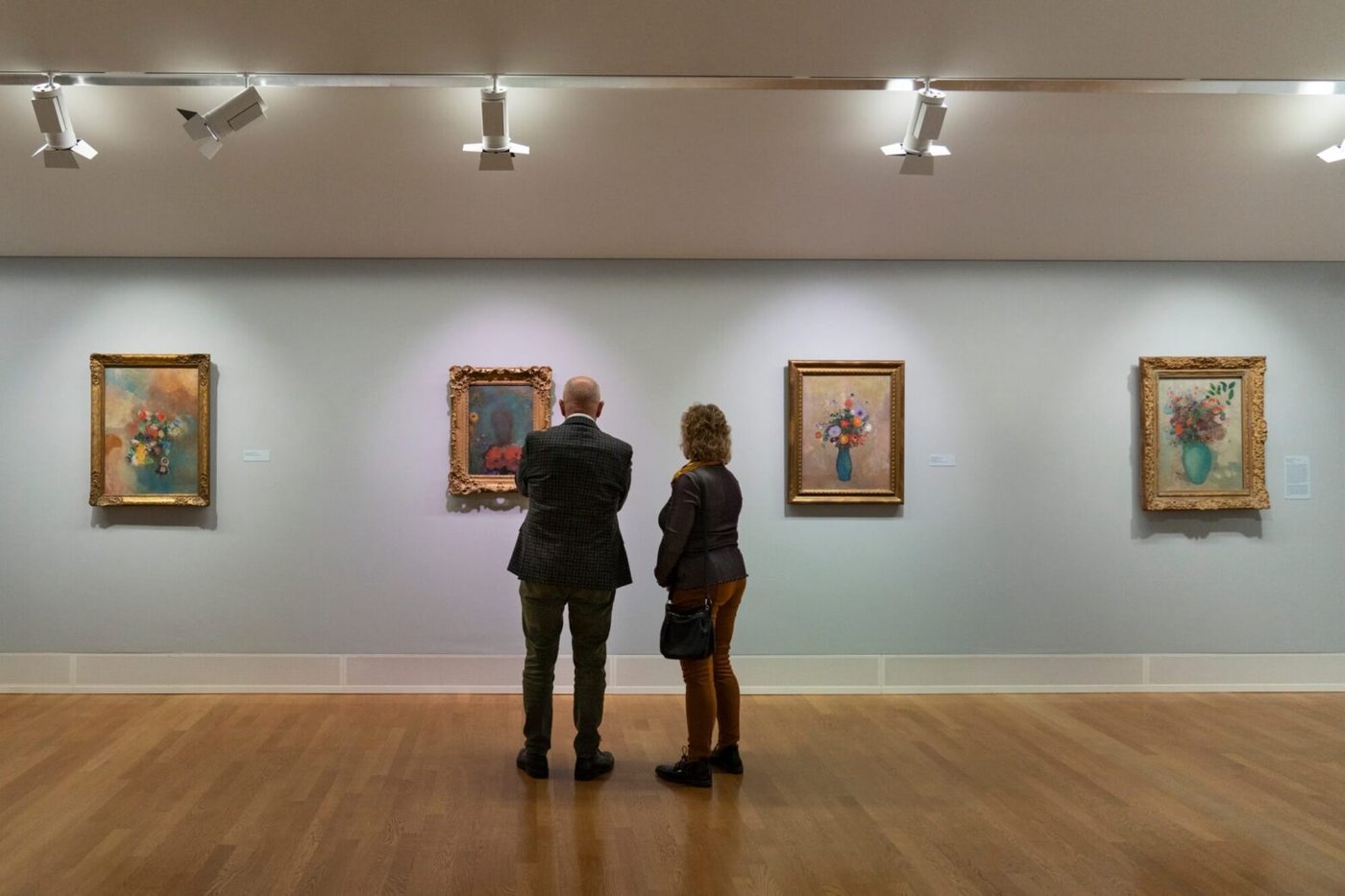
Large Vase with Flowers, c. 1912
Oil on canvas
73 × 54.6 cm
98.7 × 79.7 × 6.9 cm (framed)
Odilon Redon
Breton Village, c. 1890
Oil on canvas
22.5 × 32.5 cm
Odilon Redon
Evocation of Roussel, c. 1912
Oil on linen
73 × 54 cm
90.5 × 71.8 cm (framed)
Odilon Redon
Village by the Sea in Brittany, c. 1880
Oil on cardboard on hardboard
25.08 × 32.39 cm
37.15 × 44.45 × 3.81 cm (framed)
Odilon Redon
Et l'homme parut, interrogeant le sol d'ou il sort et qui l'attire, il se fraya la voie vers (And Man appeared; questioning theearth from which he emerged and which attracts hi m, he made his way toward somber brightness), 1883
Lithograph
Edvard Munch
Liggende akt (Reclining Nude), c. 1920
Watercolour on paper
33 × 50 cm
Edvard Munch
Boys Bathing, 1899
Color woodcut from two blocks (one sawn into two sections) on cream card
38 × 44.8 cm
46.5 × 60.1 cm (sheet)
Edvard Munch
Girls Picking Apples, 1915
Lithograph printed in two variants of green, blue, and pink
54 × 50 cm
Edvard Munch
The Kiss IV, 1902
Woodcut
47 × 47 cm
Edvard Munch
Horse Team on a Building Site, 1928/1929
Watercolour on paper
70.5 × 99.5 cm
Edvard Munch
Children in the Street, 1915
Oil on canvas
92 × 100 cm
Edvard Munch
Sunbathing, 1915
Oil on canvas
63 × 74.5 cm
Edvard Munch
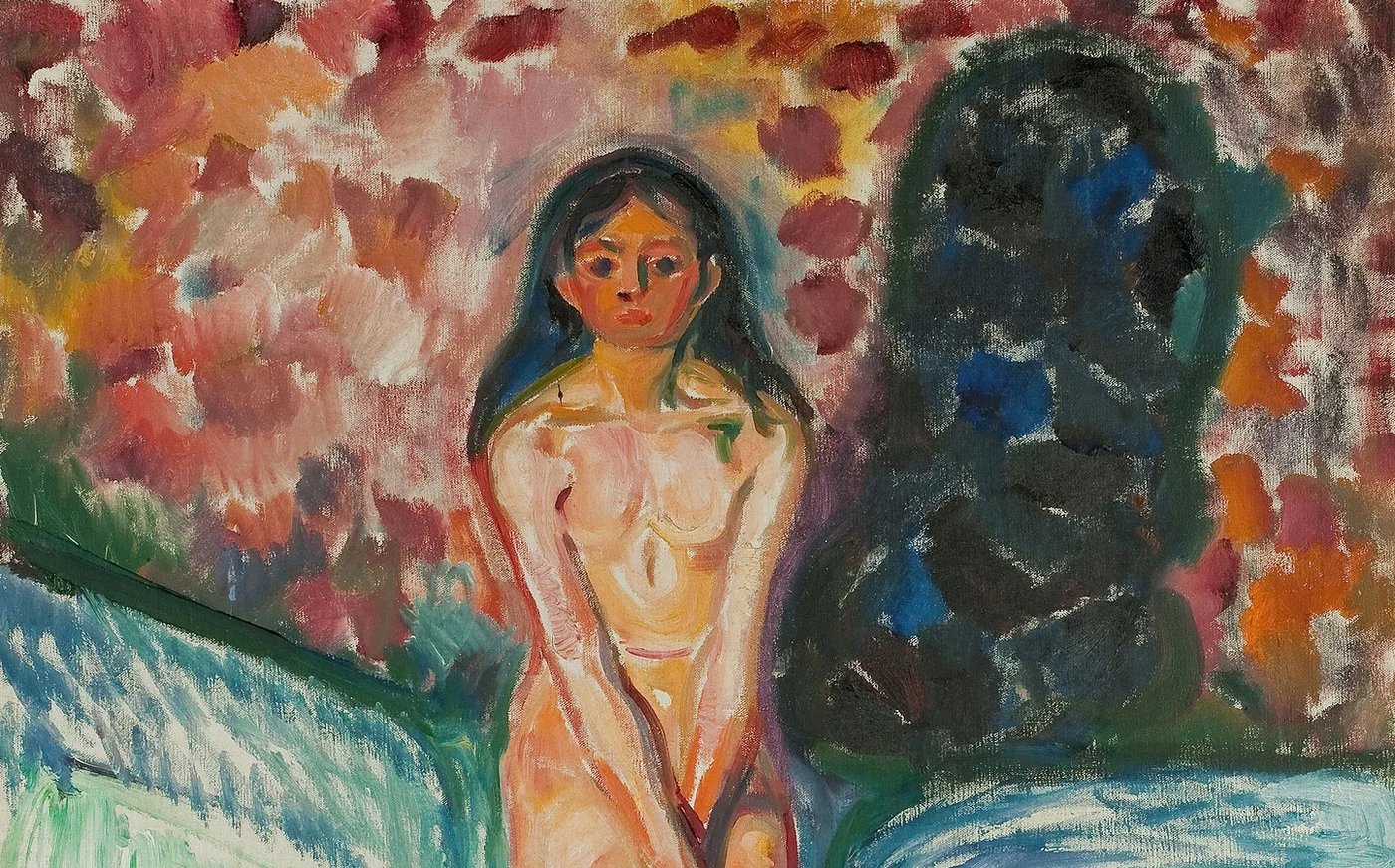
Two Women on the Shore, 1933/1935
Oil on canvas
80 × 81 cm
98 × 99 × 6 cm (framed)
Edvard Munch
The Death of Marat, 1930
Oil on canvas
150 × 200 cm
Edvard Munch
Cleopatra and the Slave, 1916/1921
Oil on canvas
Edvard Munch
Standing Nude, 1921
Watercolour on paper
56 × 23 cm
Edvard Munch
Akt med kne på seng (Nude with Knee on Bed), 1920
Watercolour on paper
43 × 34 cm
Edvard Munch
History, 1911/1916
Watercolour
450 × 1160 cm
Edvard Munch
Old Trees, 1923/1925
Oil on canvas
92 × 73 cm

Edvard Munch and Odilon Redon were near-contemporaries who never, as far as we know, met. They worked at opposite ends of Europe — Munch in Norway and Berlin, Redon in Bordeaux and Paris — and they arrived at a similar problem from opposite directions.

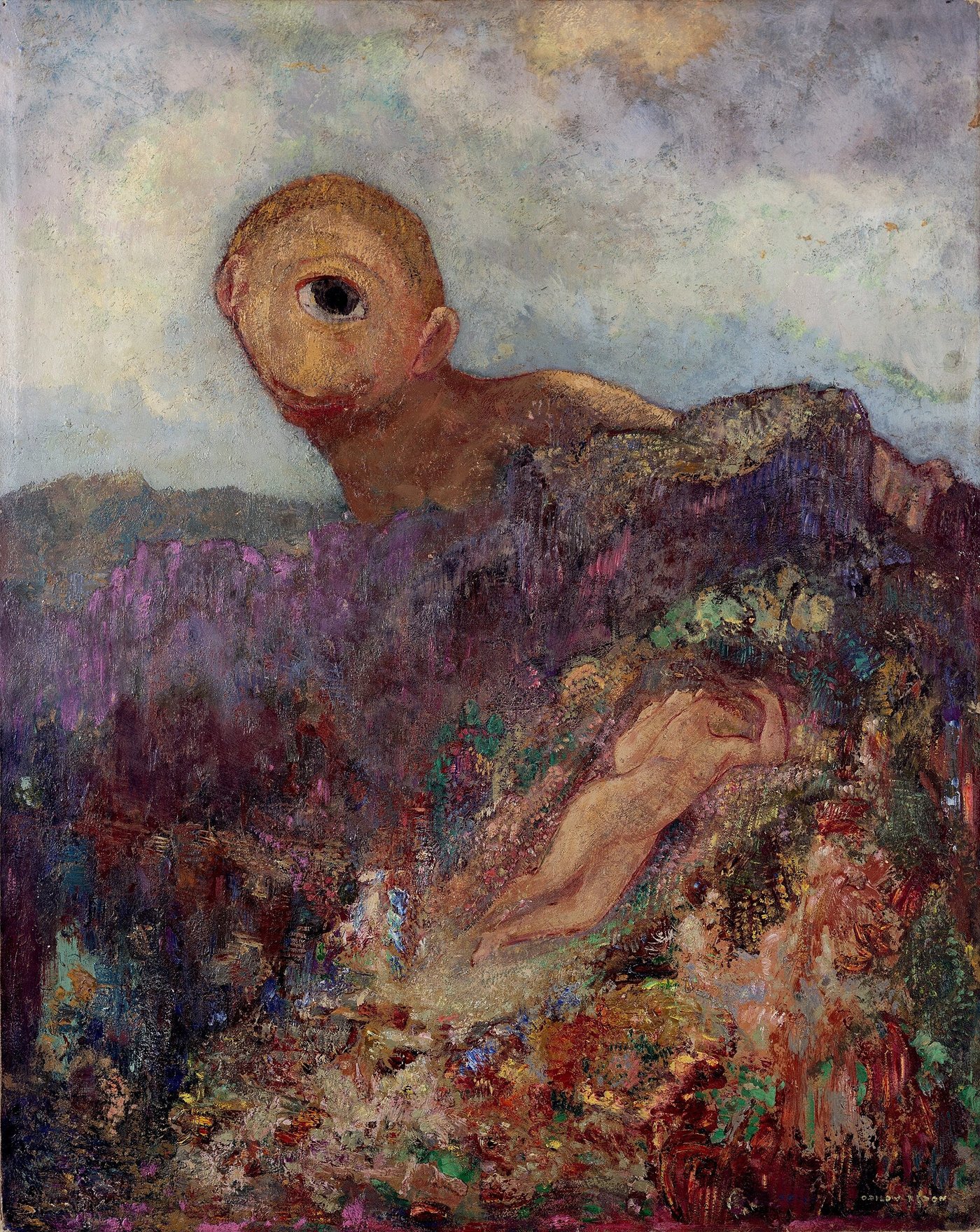
Both decided, sometime in the 1880s, that painting the visible world was not enough. What interested them was the interior: dread, dream, memory, the moment before sleep, the feeling that has no name. But where Munch painted that interior as a wound — raw, exposed, the nerves on the outside of the body — Redon painted it as a garden. His monsters are gentle. His severed heads float in flower beds. His cyclops looks at the sleeping woman with something close to love.

Munch shouts. Redon whispers. Munch's colours bruise; Redon's glow.

What they share is the conviction that the most important things happening to a human being are not happening on the surface. A century before we had a vocabulary for trauma, for the unconscious, for the way grief restructures perception — these two were already painting it.

The works in this collection are now in the public domain, which means they belong to all of us. That feels appropriate. Munch and Redon were painting things that were always already ours.